
Running a Sex Offender Check in Grimes County
The Texas Department of Public Safety operates the public source for a Grimes County sex offender lookup. Local authorities collect and verify registration details, then submit them to DPS. Residents within a city register with that city's law enforcement agency. People who live outside an incorporated city register with the county authority. This local-to-state flow matters because the public search is statewide, while the verification work begins where the person lives.
Start with the Texas Public Sex Offender Registry. It supports name, address, higher-education, and map-based approaches rather than a Grimes-only list.
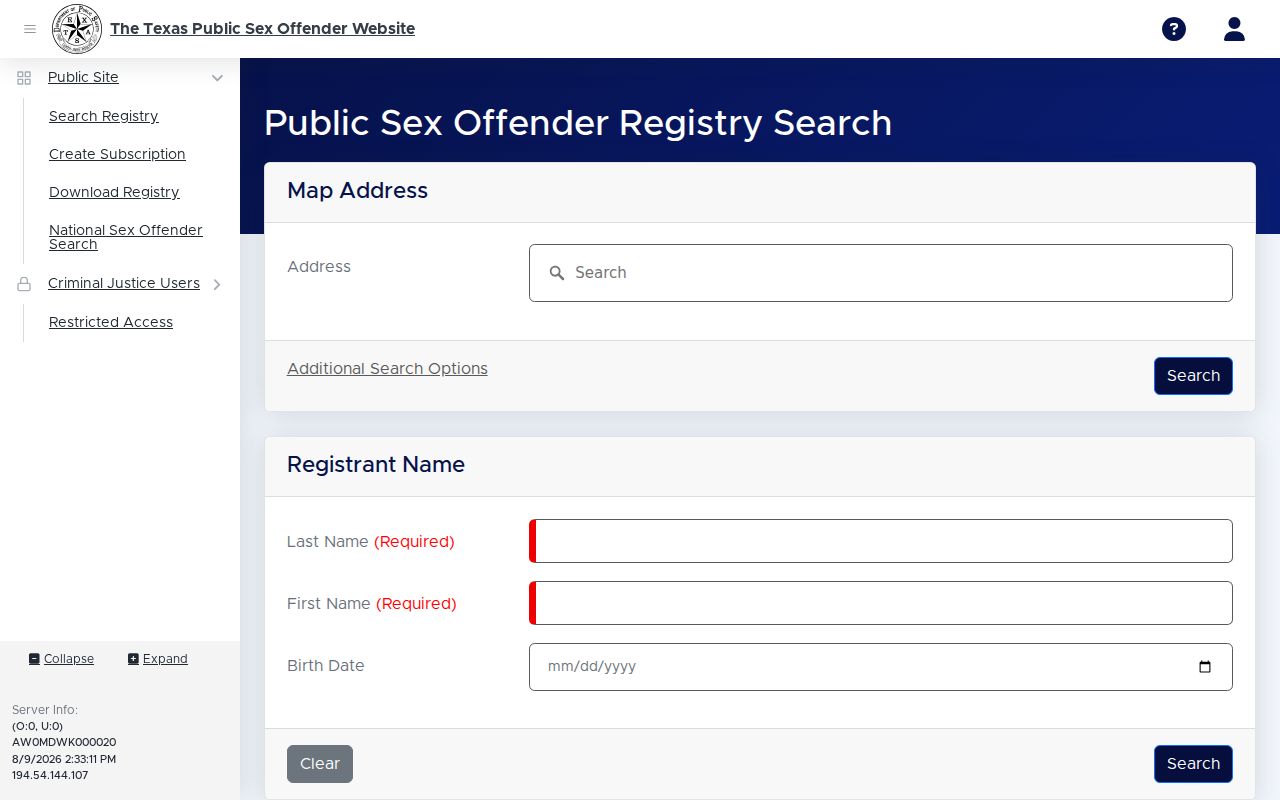
The statewide interface lets a reader narrow the search to Grimes County geography while retaining the DPS source record. Search results should be opened and read in full instead of judged from a pin, a photo, or a name alone.
Searching the Texas Public Sex Offender Registry
The Texas Public Sex Offender Registry offers several ways to search Grimes County records. A name is useful when identity is known. An address or map search is better for neighborhood awareness. The higher-education tab handles institution-based queries. DPS also says public data exports are available, but a raw data set still needs the same care as an individual profile.
- Open the official DPS registry and review its conditions of use.
- Choose Name Search, Address Search, Higher Education Search, or the map and location tool.
- Enter the facts available, run the query, and check nearby results without assuming that a map point proves a current physical presence.
- Open the full profile and compare identity, offense, residence, status, and verification details before drawing a conclusion.
| Tab or control | Type | Required | Use |
|---|---|---|---|
| Name Search | Tab | Conditional | Find a reported registrant by name. |
| Address Search | Tab | Conditional | Search an address or area and review mapped locations. |
| Higher Education Search | Tab | Conditional | Search by an institution of higher education. |
| Map or location | Interactive | No | Review statewide area or proximity results. |
| Export or download | Action | No | Access public data made available by DPS. |
| Submit, Search, Clear | Buttons | Conditional | Run or reset the selected query. |
The field choices support both a person-based Grimes County sex offender check and a place-based safety review. A new query should be run when the name spelling, city boundary, or address is uncertain.
Grimes County Registry Search Tabs
The three main tabs are not interchangeable. A name search can reveal same-name records and aliases, so physical and offense details must be compared. An address search starts with place and can identify reported locations nearby. A higher-education search is tied to institution information collected under the Texas registration program. The map adds context but should not be used as proof that a person is present at that spot at a given moment.
The Texas Sex Offender Registration Program explains the state and local roles behind the public data.
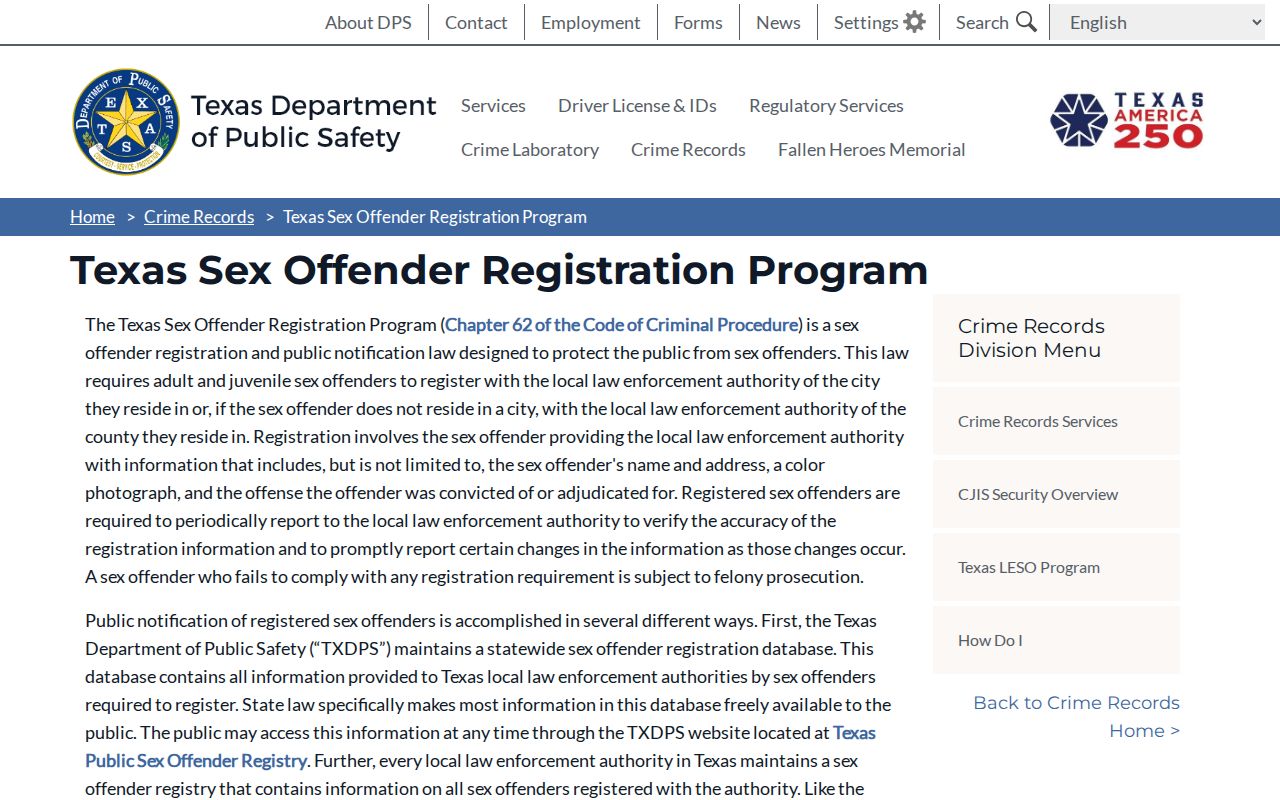
The program page is the better source for how the data is gathered, while the search page is the working tool for Grimes County names and locations. Texas DPS also offers an official mobile app with sex offender searches based on name, location, route, and proximity. It is a statewide supplement, not a Grimes County booking or court tool.
What a Registry Profile Shows
A public registry profile combines identity, appearance, place, offense, and status data. Each category has limits. A photograph and physical description help distinguish people with similar names. The registered residence or geographic location is a reported point, not a promise that the person is there at the time of a search. An offense entry describes the qualifying case, while risk and verification fields describe separate parts of the registration system.
| Name and aliases | Full name and other reported names used to distinguish identity. |
|---|---|
| Photo and description | Color photo plus reported sex, race, height, weight, eye color, hair color, and shoe size. |
| Residence or location | Registered address or geographic location used for an area-based Grimes County search. |
| Offense facts | Offense, victim age category, conviction date, and punishment information. |
| Supervision and status | Release or supervision status, registration status, verification information, and risk level where displayed. |
| Other public categories | Higher-education information and specified vehicle details for certain trafficking offenses. |
Some data is kept from the public view. Social Security and driver's-license numbers, phone numbers, online identifiers, employer details, and victim-identifying information are nonpublic. Extra DPS fields and some juvenile registration data can also be withheld. Their absence is a privacy rule, not evidence that the local authority failed to collect required data.
Grimes County Registry Profile Limits
A profile is meant to support public safety without publishing every fact gathered by law enforcement. This boundary is especially important during a Grimes County sex offender search. Public facts help identify the reported person and understand the registration basis. Private identifiers would add little safety value while increasing the risk of fraud, stalking, or harm to victims.
The official DPS criminal-history and registry FAQ explains the program alongside the state's criminal records functions. Readers should use that source when a field is unclear or a public profile seems to omit a category.
A court judgment and a registry profile also serve different needs. The registry summarizes a reportable offense and current duties. The Grimes County criminal court case record can contain the filed charge, docket, judgment, and sentence. Neither source should be forced to answer the other's question.
Registration Requirements and Levels in Texas
Texas does not use one universal public Tier I, Tier II, and Tier III scheme for every registry entry. Chapter 62 ties duration to the reportable offense category and uses low, moderate, and high risk levels for screening and notification. Risk is not a simple substitute for the offense-based duration rule. A careful Grimes County registry check reads those fields separately.
| Texas category | General duration | Public meaning |
|---|---|---|
| Sexually violent and enumerated offenses | Generally lifetime, ending at death unless a specific relief rule applies | The offense category controls duration; risk remains a separate measure. |
| Other reportable adult conviction or adjudication | Often ten years after the statutory discharge point | Article 62.101 must be applied to the exact offense and dates. |
| Juvenile adjudication | Separate juvenile duration and court-modification rules | Some juvenile registration information may be ordered nonpublic. |
| Low, moderate, or high risk | Not itself a duration | Risk affects notification and should not be read as a federal-style tier. |
The current Texas Code of Criminal Procedure Chapter 62 controls the duty. Article 62.251 provides a route to removal after verified expiration, while Article 62.301 creates a limited young-adult exemption petition. Neither provision supports a quick conclusion from age, offense title, or elapsed years alone.
Grimes County Registry Notification
Local registration feeds more than the public search. Texas can require an English and Spanish postcard notice to the immediate community for certain high-risk or civilly committed releases. Risk therefore has a role in notification even though it does not replace the statute's offense-based duration rules. Research did not identify a separate Grimes County email alert system, public local list, or published compliance-sweep schedule.
The registry remains the best routine channel for community awareness. The official Texas DPS app can add name, location, route, and proximity searches when a mobile tool is useful. A person who believes a profile contains an error should report the concern to DPS or the responsible local registration authority, not post private accusations or attempt an in-person investigation.
Note: A high-risk label affects notice, but it does not reveal every fact in the judgment or predict a new offense.
Cross-Check Grimes County Registry Results
The Texas registry is the source for a Grimes County record, but travel, relocation, and neighboring jurisdictions can make a second search useful. The U.S. Department of Justice National Sex Offender Public Website searches participating jurisdictions through one interface. It is a cross-state layer, not a replacement for the Texas profile or the local registration authority.
After a Texas search, open the National Sex Offender Public Website and accept its conditions of use.
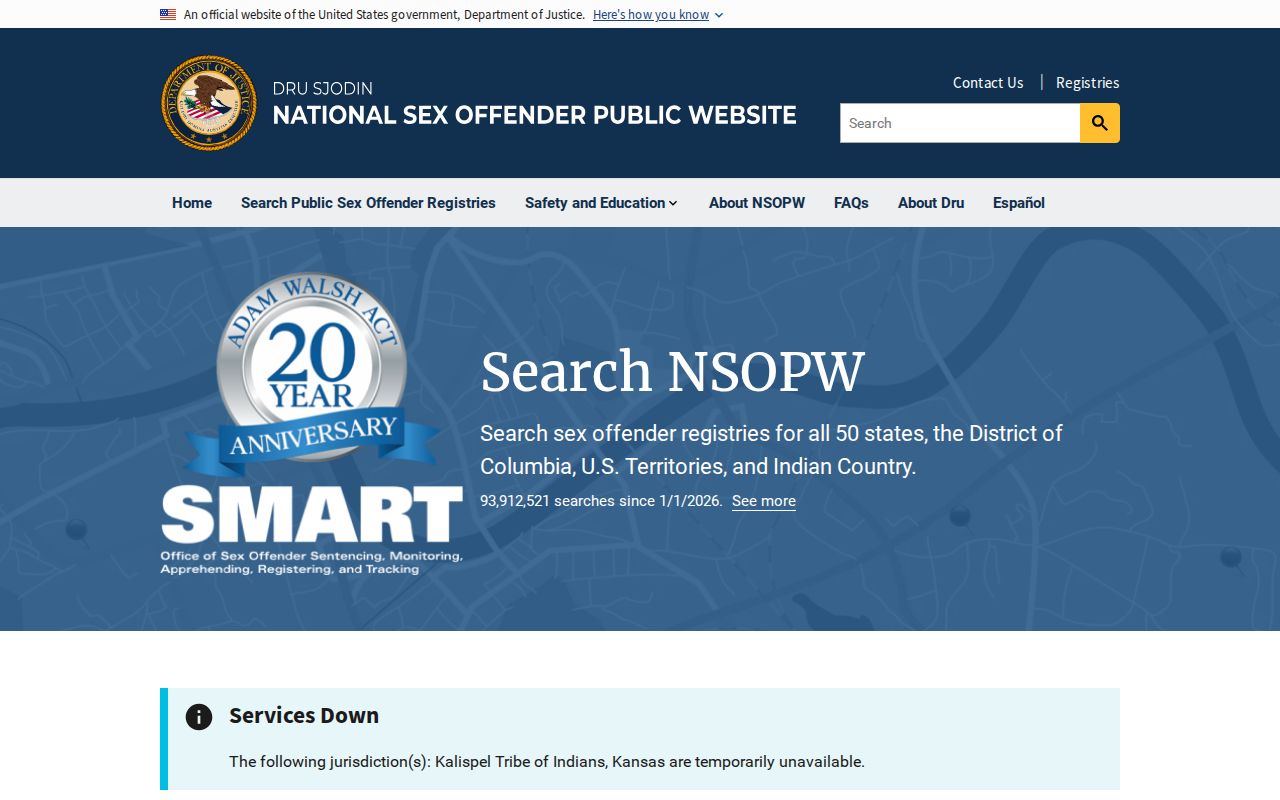
Compare name, aliases, description, location, and offense facts. If the national and Texas entries differ, return to DPS and the relevant local authority for the source record. Update timing and state reporting formats can explain a mismatch, and a national result should not be treated as a new Grimes County finding without that check.
Lawful Use and Community Notification
Registry information exists for awareness and safety planning. It may help a family understand the reported locations around a home, school route, park, or other routine trip. It does not authorize confrontation. A Grimes County sex offender check should lead to calm review of official facts, reasonable safety steps, and contact with law enforcement when there is a real concern.
The official Texas registration statute sets the public and nonpublic parts of the program.
Chapter 62 makes registration compliance enforceable and preserves private categories even while core profile facts remain public. That balance is central to lawful use.
Misuse is unlawful: Using Grimes County registry information to threaten, harass, intimidate, or commit another crime is unlawful. Texas Code of Criminal Procedure Chapter 62 authorizes public safety access, not vigilantism.
If a person appears noncompliant or a location seems wrong, save the official profile details and contact the responsible city police agency, the Grimes County Sheriff's Office for rural jurisdiction, or Texas DPS. Do not trespass, follow a person, publish protected details, or put household members at risk. Law enforcement can compare the report with nonpublic registration data and decide whether further action is needed.